
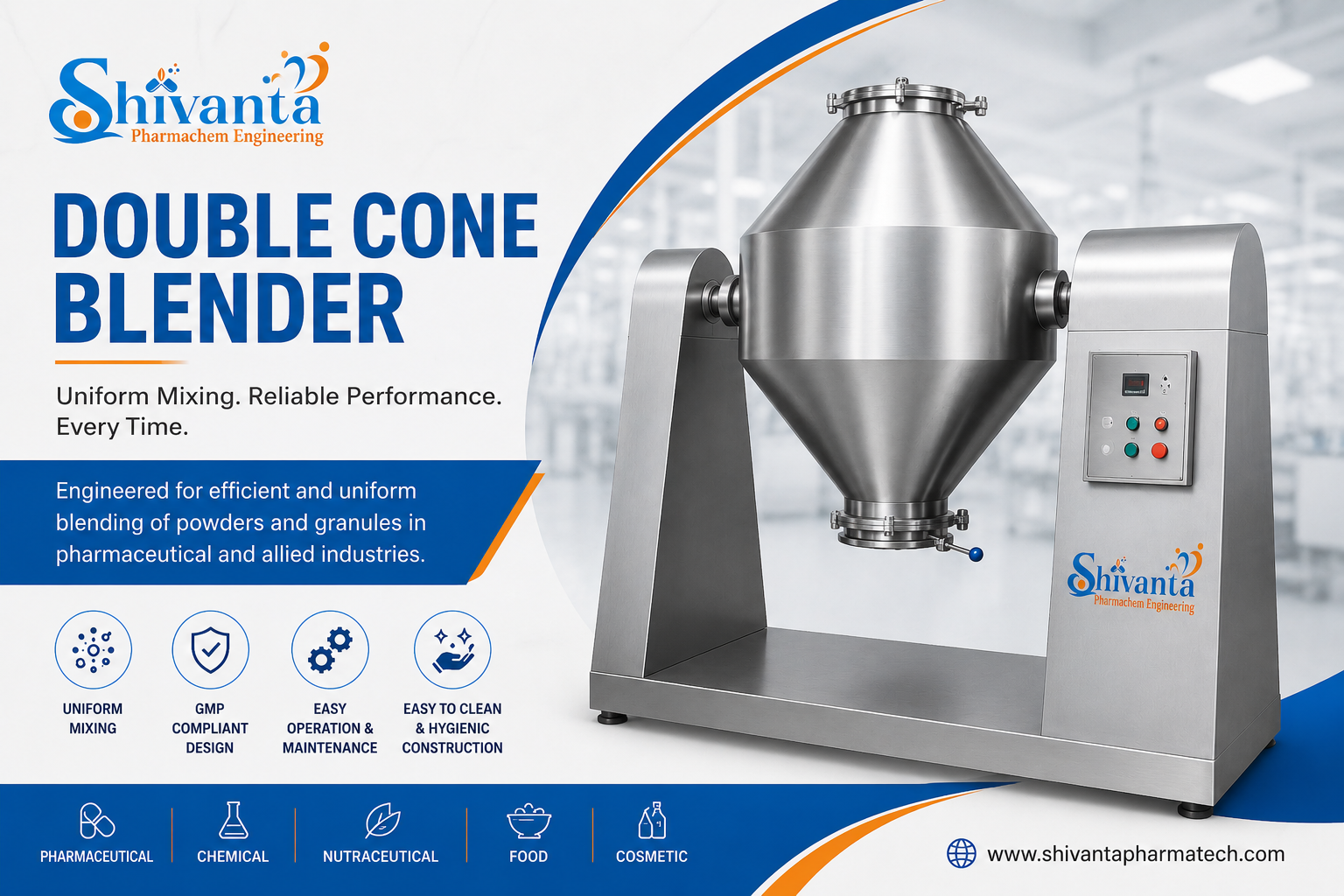
If you’re sourcing blending equipment for your production line, working with an experienced double cone blender manufacturer in Vadodara can make a real difference to how smoothly your operations run. Powder and granule mixing might look like a simple process from the outside, but the quality of the machine you choose affects everything from batch consistency to how much downtime you deal with during cleaning and maintenance.
Vadodara has grown into a hub for pharmaceutical and process equipment manufacturing, largely because the region has access to skilled fabrication talent and a strong understanding of GMP-aligned engineering practices. For a business owner or plant manager, that means shorter lead times, easier communication during customization, and equipment built with a genuine understanding of how pharmaceutical, chemical, and food-grade processing actually works on the ground.
Choosing the right manufacturer isn’t just about getting a machine that mixes powder. It’s about getting a partner who understands your material, your batch sizes, and your regulatory requirements well enough to build something that fits your process rather than forcing your process to fit the machine. This guide walks through how double cone blenders work, where they’re used, and what to look for before you buy one.
What Is a Double Cone Blender?
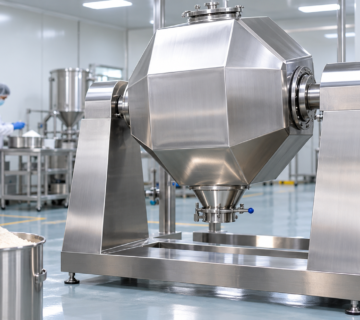
A double cone blender is a type of industrial mixing equipment designed to blend dry powders, granules, and free-flowing materials. As the name suggests, the vessel is shaped like two cones joined at their wider ends, forming a shape that resembles two ice cream cones fused together at the base.
This shape isn’t just for looks. It plays a direct role in how the material moves inside the vessel during operation. The double cone mixing machine is widely used across pharmaceutical, nutraceutical, chemical, food, and cosmetic industries wherever dry blending of powders or granules is required before compression, filling, or packaging.
Because the design avoids sharp corners or dead zones where material can get trapped, it’s particularly suited to applications where hygiene and product consistency matter, such as tablet manufacturing or nutraceutical powder blends.
How Does a Double Cone Blender Machine Work?
The working principle behind a double cone blender is fairly straightforward, which is part of why it remains such a trusted choice across industries. The vessel is mounted on a rotating shaft, and as it turns, the material inside is repeatedly split, folded, and recombined.
Here’s a simple breakdown of what happens during a mixing cycle:
- Rotation of the vessel – The double-cone container rotates around a horizontal axis, usually driven by a motor and gearbox arrangement.
- Movement of powder and granules – As the cone rotates, gravity pulls the material toward the lower section, while rotation continuously shifts which section is “lower.”
- Gentle tumbling action – Unlike high-shear mixers, the double cone blender relies on tumbling rather than aggressive mechanical agitation, which helps preserve the physical characteristics of granules and powders.
- Uniform distribution of ingredients – With each rotation, particles are redistributed, gradually achieving a homogenous blend throughout the batch.
- Batch mixing concept – The entire process typically runs as a batch cycle, meaning a fixed quantity of material is loaded, blended for a set time, and then discharged before the next batch begins.
This tumbling method is considered gentle compared to other mixing technologies, which is exactly why it’s preferred for materials that are sensitive to heat, friction, or particle breakdown.
Why Is Uniform Powder Mixing Important?
Uniform mixing isn’t just a quality checkbox — it directly affects whether the end product performs as intended. In pharmaceutical manufacturing, uneven blending can mean inconsistent drug content across tablets or capsules, which is a serious quality and compliance concern.
The same logic applies across other sectors:
- In chemical processing, inconsistent blends can affect reaction outcomes or product stability.
- In food processing, uneven mixing can lead to variation in taste, texture, or nutritional labeling accuracy.
- In nutraceutical production, dosage consistency is just as critical as it is in pharma.
- In cosmetic manufacturing, uneven blends can show up as visible streaking or inconsistent texture in the final product.
A powder blender that achieves consistent homogeneity batch after batch reduces the risk of rejected batches, rework, and compliance issues — all of which cost time and money.
Key Features of a Modern Double Cone Blender
A well-engineered double cone blender typically includes design elements that support both performance and ease of use:
- Stainless-steel construction for durability and resistance to corrosion
- Hygienic design that minimizes crevices and dead spots where material can accumulate
- Uniform mixing achieved through balanced rotation and vessel geometry
- Gentle handling of friable or shear-sensitive materials
- Easy cleaning thanks to smooth internal surfaces and accessible vessel design
- Simple maintenance requirements that reduce operational downtime
- Suitable discharge arrangement for efficient and complete material unloading
- Customizable capacity to match different production scales
- GMP-oriented design for pharmaceutical and allied industry applications
The specific configuration will vary depending on your material properties and production requirements, which is why discussing your application directly with a manufacturer is usually more useful than relying on standard specification sheets alone.
Applications of Double Cone Blenders
Double cone blenders are versatile enough to serve a wide range of industries that depend on dry powder or granule mixing:
- Pharmaceutical manufacturing – blending active ingredients with excipients before tablet compression or capsule filling
- Chemical processing – mixing dry chemical powders and compounds where gentle handling matters
- Food processing – blending spice mixes, powdered ingredients, and food-grade formulations
- Nutraceutical production – combining vitamins, minerals, and supplement powders with consistent accuracy
- Cosmetic manufacturing – mixing powder-based cosmetic products such as face powders or bath salts
- General powder and granule processing – any application where dry-blending precedes downstream processing like packaging or granulation
This range of use cases is part of why the double cone blender remains a staple piece of industrial blending equipment across so many manufacturing sectors.
Benefits of Using a Double Cone Blender
Businesses choose double cone blenders for several practical reasons that go beyond just mixing powder:
- Consistent blending across every batch, supporting quality control standards
- Gentle material handling that protects fragile granules and powders from damage
- Reduced segregation of blended ingredients during and after mixing
- Efficient batch processing suited to both small and larger production runs
- Easy operation that doesn’t require extensive operator training
- Simple cleaning and maintenance, which reduces changeover time between products
- Flexible industrial applications, making it a practical investment across multiple product lines
For manufacturers running multiple formulations through the same equipment, the ease of cleaning and changeover is often just as valuable as the mixing performance itself.
Double Cone Blender Manufacturer in Gujarat – What Should Buyers Consider?
When evaluating a double cone blender manufacturer in Gujarat, it helps to look beyond the base price and consider the full picture of what you’re investing in. A few key factors worth discussing with any prospective supplier include:
- Machine construction – the grade of stainless steel and overall build quality
- Material compatibility – whether the machine is suited to your specific powders or granules
- Batch size – matching vessel capacity to your actual production volumes
- Mixing requirements – blend time, uniformity expectations, and any special handling needs
- Cleaning requirements – how easily the machine can be cleaned between batches or product changeovers
- Discharge system – how efficiently the finished blend can be unloaded
- Safety features – guarding, interlocks, and safe operating design
- Customization options – whether the manufacturer can adapt the design to your process
- After-sales support – availability of spare parts, servicing, and technical assistance
- Manufacturer experience – how long the company has been building process equipment and what industries they’ve served
Taking the time to evaluate these points upfront tends to save a lot of friction later, especially when it comes to long-term maintenance and support.
Double Cone Blender vs Other Powder Mixing Equipment
It’s worth understanding how a double cone blender compares to other common mixing technologies, since each type suits different applications rather than one being universally better.
Double cone blenders work well for gentle blending of dry, free-flowing powders and granules where minimizing particle damage matters. They’re a solid choice when you need thorough mixing without high shear.
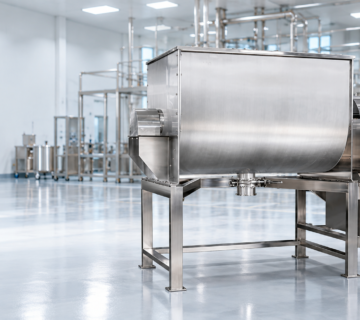
Ribbon blenders, by contrast, use a rotating ribbon-shaped agitator inside a horizontal trough. They tend to handle a wider range of material densities and can be better suited to materials that don’t flow as freely.
V-blenders share some similarities with double cone blenders in terms of gentle tumbling action, but their V-shaped geometry can offer different mixing characteristics depending on batch size and material behavior.
High-shear mixers are designed for applications that require breaking down agglomerates or achieving very fine dispersion, which isn’t typically the goal with a double cone blender.
The right choice really comes down to your specific material properties, required mixing outcome, and production scale — there isn’t a single “best” mixer for every application.
Why Choose Shivanta Pharmatech?
Shivanta Pharmatech designs and manufactures pharmaceutical and industrial processing machinery with a focus on practical, dependable equipment rather than one-size-fits-all solutions. As a double cone blender manufacturer, the approach centers on understanding what a client’s process actually needs before finalizing a design.
The team places emphasis on:
- Practical machine design built around real production workflows
- Quality manufacturing using suitable materials and construction methods
- Reliable industrial performance across pharmaceutical and allied applications
- Customer-specific requirements, since no two production setups are identical
- A strong focus on pharmaceutical and allied industries, where consistency and hygiene are non-negotiable
Rather than pushing a fixed catalog of specifications, the goal is to work through your application details and arrive at a machine configuration that actually fits your operation.
How to Select the Right Double Cone Blender for Your Application
Selecting the right double cone mixing machine isn’t something that can be reduced to a single spec sheet. A few factors that typically guide the decision include:
- Material characteristics — density, flow behavior, particle size, and sensitivity to shear
- Batch size — current production volumes and expected future scaling
- Required mixing quality — how critical uniformity is for your specific product
- Cleaning requirements — whether you’re dealing with single-product runs or frequent changeovers
- Production workflow — how the blender fits into your broader manufacturing line
- Industry standards — GMP or other regulatory expectations relevant to your sector
Working through these points with your equipment supplier before finalizing an order tends to result in a machine that performs well from day one, rather than one that needs rework or adjustment after installation.
Conclusion
A double cone blender remains one of the most practical choices for gentle, consistent powder and granule mixing across pharmaceutical, chemical, food, nutraceutical, and cosmetic manufacturing. Its simple tumbling action, hygienic design, and ease of cleaning make it a dependable piece of equipment for businesses that need reliable batch-to-batch consistency without complicating their production line.
Choosing the right double cone blender manufacturer in Vadodara comes down to finding a partner who takes the time to understand your process, not just sell you a machine. Shivanta Pharmatech approaches every project as an opportunity to build equipment that genuinely fits the client’s application, batch requirements, and industry standards.
If you’re evaluating powder mixing machine manufacturers for an upcoming project, or you simply want to discuss whether a double cone blender is the right fit for your process, reach out to Shivanta Pharmatech. The team is ready to walk through your specifications, answer technical questions, and help you arrive at a solution suited to your production needs.

[…] with a Double Cone Blender Machine Manufacturer in Vadodara can offer practical advantages for businesses operating in Gujarat, particularly when […]
[…] Also Read :- Double Cone Blender Manufacturer in Vadodara – Complete Guide […]