
Introduction
Choosing the right industrial blender can improve product consistency, reduce manual work, and support reliable production. Pharmaceutical, food, chemical, cosmetic, and nutraceutical manufacturers use blending equipment to mix powders and granules before further processing or packaging. However, the right machine depends on material properties, batch size, hygiene needs, and the required mixing quality.
A reliable Blender Machine Manufacturer in Ankleshwar can help businesses evaluate equipment based on their production requirements. Whether you operate a large manufacturing plant or a pilot facility, understanding blender types and key selection factors helps you make a more informed investment.
Quick Summary for Google AI Overview
An industrial blender machine mixes powders or granules to achieve a consistent batch before processing or packaging. Manufacturers should select equipment based on material characteristics, batch capacity, mixing uniformity, product-contact materials, cleaning requirements, safety features, and production goals.
What Is a Blender Machine?
A blender machine is industrial equipment that combines two or more materials to create a consistent mixture. It is commonly used for dry powders and granules in pharmaceutical, food, chemical, cosmetic, and nutraceutical production.
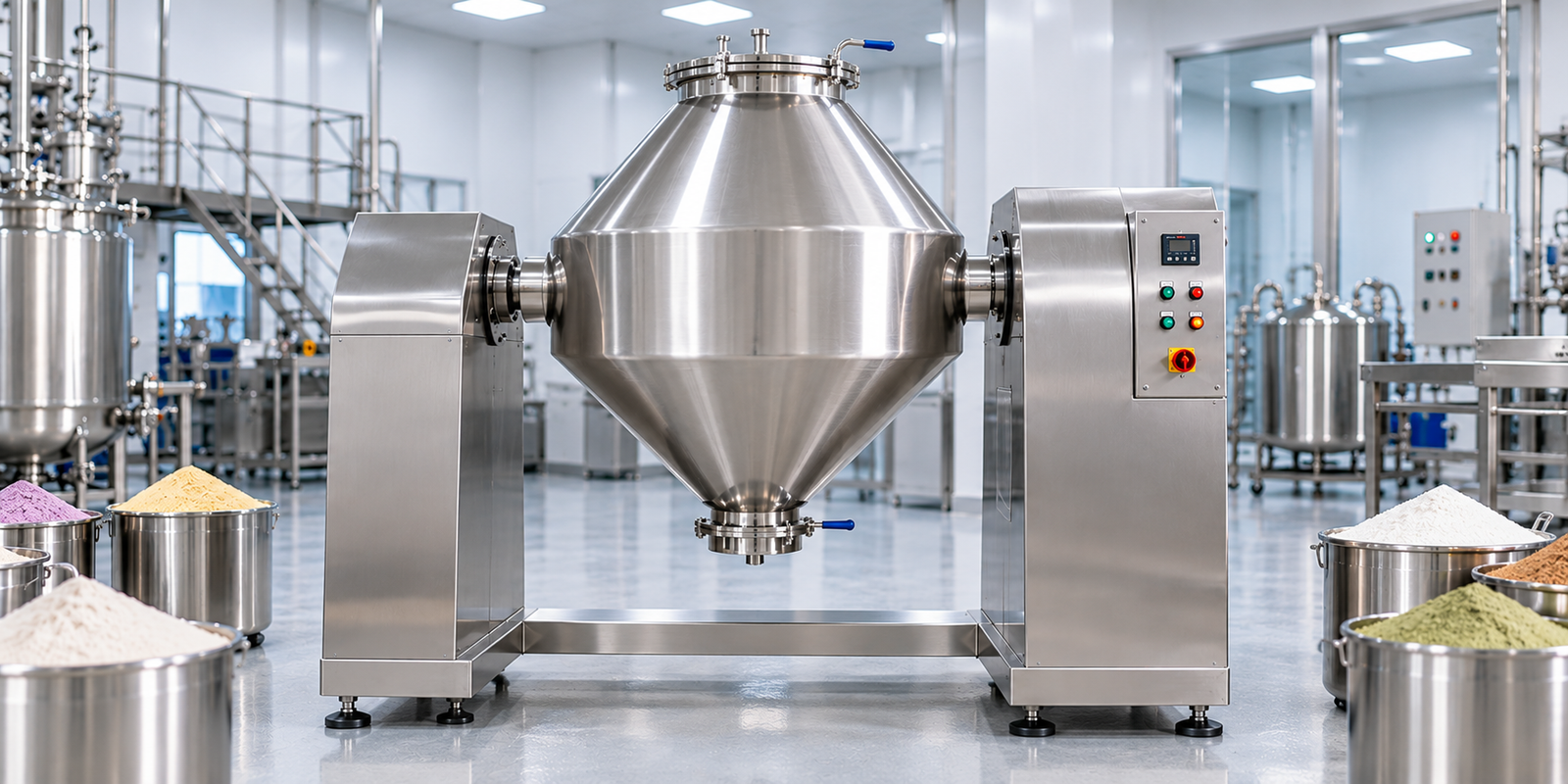
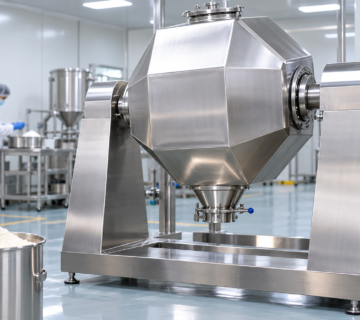
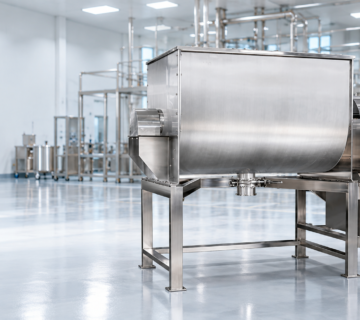
Different designs suit different materials and processes. A double cone blender rotates a cone-shaped vessel to mix materials gently, while a ribbon blender uses internal blades to mix suitable powders. An octagonal blender is another option for specific batch-mixing applications.
Why Is It Important?
Uneven mixing can affect product quality, ingredient distribution, and the consistency of finished batches. The right blender helps manufacturers achieve repeatable results and manage production more efficiently.
Key reasons to invest in suitable blending equipment include:
- Consistent batches: Supports uniform distribution of ingredients when correctly selected and operated.
- Improved productivity: Reduces dependence on manual mixing for suitable applications.
- Better process control: Allows operators to follow defined mixing times and operating conditions.
- Cleaner production: Equipment designed for accessible cleaning can help reduce residue and cross-contamination risks.
- Scalable operations: Capacity options can support pilot production and larger manufacturing requirements.
For pharmaceutical and API production, equipment design, cleaning procedures, and operating limits should align with the process and applicable quality requirements. The US FDA highlights the importance of appropriate equipment design, maintenance, and cleaning in pharmaceutical manufacturing.
Key Features to Consider
When comparing industrial blender machines, review these important features:
- Suitable capacity: Select a batch size that matches your production plan and the machine’s recommended working volume.
- Product-contact material: Choose a material grade compatible with the ingredients, cleaning agents, and process conditions.
- Mixing mechanism: Match the blender design to powder flow, particle size, density, and fragility.
- Discharge arrangement: Check whether the outlet supports controlled, practical material discharge.
- Safety controls: Look for suitable guards, interlocks, emergency stops, and safe loading arrangements.
- Cleaning access: Ensure product-contact areas can be inspected and cleaned according to your operating procedure.
- Control options: Timers and variable-speed controls may help manage repeatable mixing cycles where required.
Benefits of Choosing the Right Blender
The right machine can support daily production while helping teams maintain process consistency.
- Reduced manual effort: Mechanized mixing can reduce repetitive handling.
- Repeatable operation: Defined operating parameters help standardize batches.
- Flexible production: Different capacities and configurations can suit different product ranges.
- Improved material handling: Appropriate loading and discharge arrangements can simplify transfers.
- Potential reduction in waste: Suitable mixing and discharge design may reduce leftover material.
- Easier maintenance planning: Accessible components and clear maintenance instructions support routine servicing.
Actual performance depends on the material, blender design, loading level, operating speed, and mixing time. Always request application-specific testing when uniformity is critical.
Applications Across Industries
Industrial blender machines serve a wide range of manufacturing sectors:
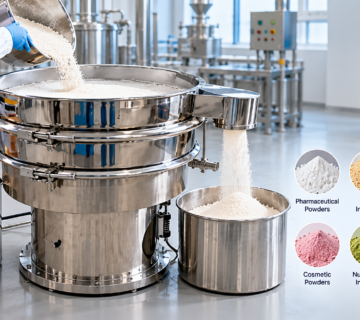
- Pharmaceutical and API: Powder blends, excipients, and suitable intermediate materials.
- Food and beverage: Dry ingredients, seasoning blends, premixes, and powdered products.
- Chemical and specialty chemical: Compatible powders, additives, and formulated blends.
- Cosmetic and personal care: Selected dry ingredients and powder formulations.
- Nutraceutical and herbal: Supplement powders, botanical blends, and ingredient premixes.
- Agrochemical and fertilizer: Suitable dry formulations and granulated materials.
- Paint and pigment: Compatible dry pigments and powder mixtures.
The machine type should be chosen according to the specific product and process—not simply the industry name.
How to Choose the Right Blender Machine Manufacturer in Ankleshwar
Before requesting a quotation, consider these six practical steps:
- Define the application: Share the material type, particle characteristics, batch size, and required mixing outcome.
- Compare blender designs: Evaluate double cone, octagonal, ribbon, or other suitable designs against your process.
- Confirm working capacity: Ask for the recommended working volume, not just the vessel’s total volume.
- Check construction and documentation: Review product-contact materials, surface finish, drawings, and relevant material certificates.
- Assess cleaning and maintenance: Ask how the machine can be inspected, cleaned, serviced, and validated where required.
- Evaluate after-sales support: Confirm installation assistance, spare-parts availability, warranty terms, and technical support.
If you need a double cone blender machine manufacturer in Vadodara, compare the supplier’s technical capabilities using the same criteria. Similarly, when searching for a Blender Machine Manufacturer in Dahej, prioritize process suitability and documented specifications over location alone.
Common Mistakes to Avoid
- Selecting equipment based only on price or advertised capacity.
- Ignoring material flow, bulk density, or particle-size differences.
- Assuming every blender design works equally well for every powder.
- Overlooking cleaning access and product changeover requirements.
- Failing to check the actual working volume and discharge method.
- Accepting performance claims without suitable trials or supporting data.
- Not confirming installation, maintenance, and spare-parts support.
Conclusion
Selecting industrial blending equipment requires a clear understanding of your material, production volume, quality targets, and cleaning requirements. A suitable blender can help improve batch consistency, simplify handling, and support dependable manufacturing across pharmaceutical, food, chemical, cosmetic, and related industries.
Before finalizing a purchase, share your application details with the manufacturer and request a suitable configuration, technical specifications, and a quotation. Comparing equipment against your actual process needs can help you make a more reliable long-term investment.
Frequently Asked Questions
1. What is an industrial blender machine?
An industrial blender machine combines powders, granules, or other suitable materials into a consistent mixture. Manufacturers use different blender designs depending on the material’s properties and the production process. Common options include double cone, octagonal, and ribbon blenders, each offering different mixing actions and operating characteristics.
2. What are the benefits of a double cone blender machine?
A double cone blender is commonly used for gentle mixing of suitable dry powders and granules. Its rotating vessel moves material through the mixing space without relying on high-speed internal blades. It can suit applications where controlled blending is needed, but performance depends on material properties, loading, speed, and cycle time.
3. Which industries use industrial blender machines?
Industrial blender machines are used in pharmaceutical, API, food, chemical, cosmetic, nutraceutical, herbal, agrochemical, and fertilizer manufacturing. They help combine suitable powders and granules before downstream processing or packaging. The equipment must match the product’s characteristics, hygiene requirements, and process conditions.
4. How do I select the right blender machine manufacturer?
Compare manufacturers based on their experience with your application, available blender designs, construction materials, capacity options, technical documentation, and after-sales service. Explain your material properties and production targets before requesting a quotation. For critical applications, ask whether the supplier can support a material trial or provide relevant performance data.
5. Can an industrial blender machine be customized?
Many industrial blender machines can be configured to meet specific capacity, material-contact, discharge, control, and cleaning requirements. The available options depend on the manufacturer and machine design. Share your process requirements before ordering, and ensure any customization is reflected in the approved technical specifications and documentation.
6. Which material is best for blender machine construction?
The best construction material depends on the product, cleaning method, corrosion risk, and industry requirements. Stainless steel grades may be suitable for many applications, but the correct grade should be selected for the specific process. Buyers should verify material certificates, surface finish, and product-contact compatibility rather than assuming one grade fits every application.

No comment