
Introduction
Choosing the right size-reduction equipment is important for maintaining product quality, production efficiency, and consistent particle size in industrial processing. A Multimill Machine Manufacturer in India can help pharmaceutical, food, chemical, and nutraceutical companies select equipment suited to their material characteristics and production requirements. Multimill machines are widely used for granulation, pulverization, and size reduction of suitable materials. Understanding their working principle, construction, and applications helps manufacturers make informed purchasing decisions, reduce avoidable downtime, and select machinery that fits their production process.
Quick Summary: A multimill machine is industrial processing equipment used to reduce particle size and achieve the required granule consistency. It uses a rotating blade assembly and a perforated screen to process suitable materials. Pharmaceutical, food, chemical, and nutraceutical manufacturers use multimills to support efficient, repeatable production.
What Is a Multimill Machine?
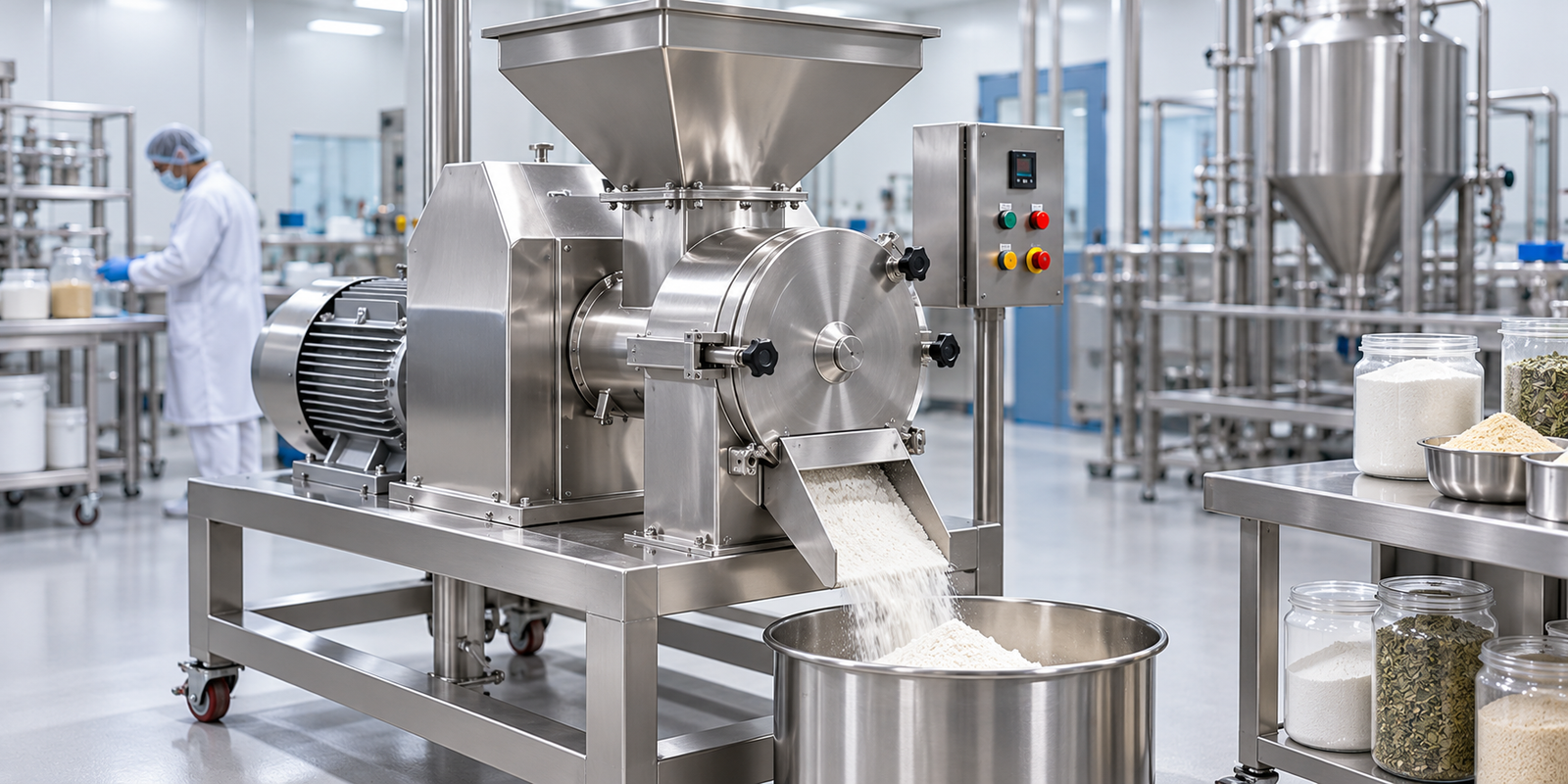
A multimill machine is a size-reduction system designed to break down, cut, or granulate materials into smaller particles. It typically uses rotating blades or beaters that work against a perforated screen. The screen opening and machine configuration help determine the resulting particle size.
Depending on the design, a multimill can process materials through cutting, impact, and shearing action. Manufacturers can select suitable blade configurations and screen sizes according to the material and required output.
A Multimill Pulverizer Machine Manufacturer for Pharma Industry should understand the differences between dry granulation, wet granulation, and other size-reduction requirements before recommending a configuration.
Why Is a Multimill Machine Important?
Consistent particle size can influence material flow, blending, compression, dissolution, and downstream processing. In pharmaceutical manufacturing, a multimill may help break down granules to a suitable size before tablet compression or other production stages.
Food processors may use multimills to process selected dry ingredients, while chemical manufacturers may use them for compatible powders and granules. The correct equipment can help reduce manual processing and improve production consistency.
However, performance depends on feed characteristics, moisture content, screen selection, rotor speed, and machine capacity. Heat-sensitive, sticky, abrasive, or combustible materials may require specialized configurations or alternative equipment.
Key Features of a Multimill Machine
When evaluating a machine, review the following features:
- Rotating blade assembly: Provides cutting, impact, or shearing action according to the blade design.
- Interchangeable screens: Allows operators to select suitable perforation sizes for different processing requirements.
- Variable speed options: Certain models allow speed adjustment to suit material characteristics and process needs.
- Stainless steel construction: Appropriate stainless steel grades can support cleanability and corrosion resistance in suitable applications.
- Accessible components: A practical design simplifies inspection, cleaning, maintenance, and screen replacement.
- Safety interlocks: Suitable safety features help protect operators during normal use and maintenance.
- Multiple configurations: Different models can support varying production capacities and material requirements.
For pharmaceutical applications, verify contact-material specifications, cleaning procedures, documentation, and compliance requirements before purchase.
Benefits of Using a Multimill Machine
A correctly selected multimill can offer several practical advantages:
- Consistent processing: Suitable screens and operating settings help produce more uniform material.
- Improved productivity: Mechanical size reduction can process suitable materials faster than manual methods.
- Process flexibility: Interchangeable screens and blade options may support multiple products.
- Reduced manual handling: Automated processing can limit unnecessary material transfers.
- Simplified maintenance: Accessible parts can make routine inspection and replacement easier.
- Better process integration: A suitable machine can fit into granulation, powder processing, and production lines.
These benefits depend on correct installation, operation, preventive maintenance, and material compatibility.
Applications of Multimill Machines
Multimills are used across industries that require controlled size reduction or granulation.
- Pharmaceutical industry: Processing suitable wet or dry granules before subsequent manufacturing stages.
- API and bulk drug industry: Size reduction of compatible intermediates and materials.
- Food and beverage industry: Processing selected dry ingredients and granulated products.
- Nutraceutical industry: Processing suitable supplement ingredients and granules.
- Ayurvedic and herbal industry: Reducing the size of compatible dried herbal materials.
- Chemical industry: Processing selected chemical granules and solids.
- Cosmetic industry: Processing compatible raw materials used in personal care formulations.
- Agrochemical and fertilizer industry: Size reduction of suitable granulated products.
- Paint and pigment industry: Processing selected dry materials where the equipment is technically appropriate.
Material testing and safety assessment are essential when handling abrasive, toxic, reactive, heat-sensitive, or combustible substances.
How to Choose the Right Multimill Machine Manufacturer in India
Before purchasing equipment, compare manufacturers against your actual production needs.
- Define your application: Explain whether you need wet granulation, dry granulation, pulverization, or another size-reduction process.
- Confirm production capacity: Ask for throughput information based on your specific material rather than relying only on a general capacity rating.
- Check material of construction: Review the required stainless steel grade, contact surfaces, finish, and corrosion resistance.
- Evaluate screen and blade options: Confirm that the manufacturer can supply suitable configurations for your required particle size.
- Review cleaning and safety: Ask about dismantling, cleaning access, guarding, interlocks, and dust-control arrangements.
- Compare technical support: Check installation assistance, spare-parts availability, warranty conditions, and maintenance support.
If you are looking for a Pharmaceutical Multimill Machine Manufacturer in Gujarat, compare technical documentation and application experience alongside the purchase price. Buyers searching for a High Speed Multimill Machine Supplier in Gujarat should also verify that the proposed operating speed suits their material and process.
Common Mistakes to Avoid
Avoid these frequent purchasing and operating mistakes:
- Choosing a machine based only on its advertised maximum capacity.
- Ignoring material moisture, hardness, abrasiveness, or heat sensitivity.
- Selecting screen perforations without conducting suitable process trials.
- Assuming one blade configuration works equally well for every product.
- Overlooking cleaning validation, operator safety, and dust-control needs.
- Failing to confirm spare-parts availability and after-sales service.
- Buying equipment without checking its compatibility with existing production systems.
A clear technical discussion before ordering can help prevent unsuitable equipment selection and unexpected operating costs.
Conclusion
A multimill machine can support efficient size reduction and granulation across pharmaceutical, food, chemical, nutraceutical, and other industrial applications. The right choice depends on the material, required particle size, throughput, cleaning needs, and operating conditions.
If you are planning a new production line or upgrading existing equipment, contact your preferred machinery manufacturer to discuss your application and technical requirements. Share your material type, required capacity, and processing objective to identify a suitable machine configuration.
Frequently Asked Questions
What is a multimill machine used for?
A multimill machine is used to reduce the size of suitable materials through cutting, impact, and shearing action. It is commonly used for granulation and size reduction in pharmaceutical, food, chemical, and nutraceutical processing. The exact application depends on the material, blade configuration, screen size, and required particle characteristics.
How does a multimill machine work?
A multimill typically feeds material into a processing chamber containing rotating blades or beaters. These components reduce the material as it moves against a perforated screen. Particles small enough to pass through the screen exit the chamber. Actual performance depends on rotor speed, screen openings, feed rate, and material properties.
What are the benefits of a pharmaceutical multimill machine?
A pharmaceutical multimill can support repeatable granule sizing, efficient processing, and integration with downstream manufacturing equipment. Interchangeable screens may allow different processing requirements to be handled on suitable models. Buyers should also evaluate cleanability, material compatibility, safety features, and documentation to ensure the machine fits the facility’s quality requirements.
Which industries use multimill machines?
Multimill machines are used in pharmaceutical, API, nutraceutical, food, chemical, herbal, cosmetic, and selected agrochemical applications. They are useful where compatible materials require controlled size reduction or granulation. Not every machine suits every industry, so buyers should confirm material compatibility and any industry-specific hygiene, safety, or process requirements.
How do I choose a multimill machine manufacturer in India?
Compare manufacturers based on technical expertise, construction quality, processing capacity, screen options, cleaning access, safety features, and after-sales support. Ask for specifications relevant to your actual material and process. For pharmaceutical installations, review the documentation and qualification support available before making a final purchasing decision.
Can a multimill machine process both wet and dry materials?
Some multimill models and configurations can process suitable wet granules and dry materials, but capabilities vary by design. Moisture, stickiness, temperature sensitivity, and material strength affect performance. Confirm the intended application with the manufacturer and conduct trials where necessary before using one machine for multiple processing conditions.
What materials are used to manufacture pharmaceutical multimill machines?
Pharmaceutical multimills commonly use stainless steel for product-contact parts, with the grade selected according to corrosion resistance, cleaning requirements, and product compatibility. Other components may use different materials based on their function. Buyers should request material certificates, surface-finish specifications, and cleaning guidance when these are required by their quality system.
What factors affect the capacity of a multimill machine?
Capacity depends on material hardness, moisture, feed rate, screen perforation, rotor speed, blade design, and the required particle size. A machine’s advertised maximum output may not reflect performance with your product. Ask the manufacturer for application-specific estimates or trial results before finalizing equipment for a production line.


No comment