

Introduction
Accurate powder screening is essential for maintaining product quality in pharmaceutical, food, chemical, and cosmetic manufacturing. A vibro sifter separates particles according to size, removes unwanted oversized material, and supports consistent production. Choosing a reliable Vibro Sifter Manufacturer in India helps businesses select equipment suited to their material, production capacity, and hygiene requirements. Whether you operate a pharmaceutical plant, a powder processing unit, or a pilot facility, understanding the machine’s features and applications can help you improve screening efficiency and make an informed investment.
Quick Summary: A vibro sifter is a vibratory screening machine that separates powders and granules by particle size using a mesh screen. It helps manufacturers improve product consistency, remove oversized particles, and support efficient processing. The right machine depends on material properties, capacity, mesh size, hygiene standards, and cleaning requirements.
What Is a Vibro Sifter?
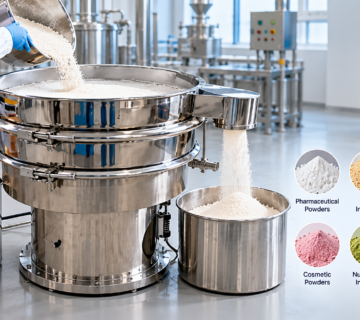
A vibro sifter is an industrial screening machine that uses controlled vibration to separate materials based on particle size. The material moves across a mesh screen, allowing smaller particles to pass through while larger particles remain on the screen.
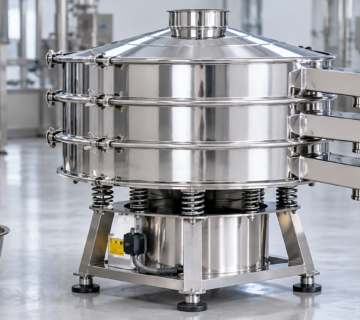
A typical machine includes a screening chamber, mesh assembly, vibrating motor, supporting springs, and discharge outlets. A multi deck vibro sifter uses multiple screens to separate material into different size fractions in one operation.
Manufacturers offer different configurations depending on the material, required output, and processing environment.
Why Is a Vibro Sifter Important?
Inconsistent particle sizes can affect product quality, downstream processing, and production efficiency. A properly selected industrial vibro sifter machine helps manufacturers maintain more consistent screening results.
Its importance includes:
- Consistent particle sizing: Helps achieve the required particle-size range for further processing.
- Improved product quality: Removes unwanted oversized particles and foreign material that the screening process can capture.
- Better production flow: Supports efficient material preparation before mixing, filling, granulation, or packaging.
- Reduced manual screening: Automates screening tasks that might otherwise require more operator effort.
- Process control: Allows manufacturers to select suitable mesh sizes and screening configurations.
Actual performance depends on material characteristics, screen condition, machine settings, and operating practices.
Key Features of an Industrial Vibro Sifter Machine
When evaluating equipment from a vibro sifter supplier, consider these features:
- Vibratory motor: Generates the motion required to move material across the screening surface.
- Interchangeable mesh screens: Allow screening according to different particle-size requirements.
- Multi-deck design: Separates material into several size fractions when the process requires it.
- Stainless steel construction: Suitable stainless steel grades can support corrosion resistance and routine cleaning.
- Quick screen replacement: Simplifies changeovers when the design allows easy access to the mesh assembly.
- Enclosed screening chamber: Helps control dust release when properly designed and integrated with suitable dust-control measures.
- Accessible components: Make inspection, cleaning, and routine maintenance easier.
Benefits of Using a Pharmaceutical Vibro Sifter
A pharmaceutical vibro sifter can support reliable powder handling when selected and operated according to process requirements.
- Improved consistency: Helps maintain the desired particle-size distribution.
- Higher operational efficiency: Automates repetitive screening tasks.
- Better material recovery: Suitable screen selection can reduce avoidable material loss during screening.
- Simplified cleaning: Appropriate construction and accessible components support cleaning procedures.
- Flexible production: Interchangeable screens can accommodate different products and batch requirements.
- Support for quality systems: Documented inspection, cleaning, and maintenance procedures help manufacturers manage process consistency.
Equipment alone does not guarantee GMP compliance; the complete installation and operating procedures must meet applicable requirements.
Applications of Vibro Sifters
Vibro sifters are used across industries that process powders, granules, and selected other materials.
- Pharmaceutical and API manufacturing: Screening ingredients and granules during suitable process stages.
- Food and beverage processing: Sieving flour, spices, sugar, and other dry ingredients.
- Chemical manufacturing: Screening compatible chemical powders and granules.
- Cosmetic production: Processing powders used in personal care formulations.
- Nutraceutical and Ayurvedic manufacturing: Screening herbal powders and nutritional ingredients.
- Fertilizer and agrochemical industries: Classifying suitable granular and powdered products.
- Paint and pigment production: Screening compatible dry raw materials.
- R&D and pilot plants: Evaluating screening conditions before production-scale implementation.
How to Choose the Right Vibro Sifter
Before purchasing from a vibro sifter manufacturer in India, evaluate these six factors:
- Material characteristics: Consider particle size, moisture, bulk density, flow behaviour, and any special handling needs.
- Required capacity: Match the machine to your expected hourly throughput and batch size.
- Mesh specification: Select an appropriate mesh opening based on the required separation and product quality.
- Construction material: Confirm the stainless steel grade, surface finish, and compatibility with the product and cleaning agents.
- Cleaning and maintenance: Ask about screen replacement, inspection access, spare parts, and cleaning procedures.
- Supplier support: Review technical documentation, installation assistance, warranty terms, and after-sales service.
For pharmaceutical applications, also discuss product-contact requirements, dust containment, validation needs, and relevant quality-system expectations.
Common Mistakes to Avoid
Avoid choosing a machine based only on its quoted price or advertised capacity. Actual output can vary with material flow, moisture, particle characteristics, mesh selection, and operating conditions.
Other common mistakes include selecting the wrong mesh size, overlooking cleaning access, ignoring dust-control requirements, and failing to confirm the availability of replacement screens and spare parts.
Before placing a bulk order, share your material details and expected production requirements with the supplier. A technical discussion can help identify a suitable configuration.
Conclusion
A well-selected vibro sifter helps manufacturers screen powders and granules more consistently while supporting efficient production. The right equipment should match the material, required capacity, mesh specifications, hygiene needs, and maintenance practices.
Shivanta Pharmachem Engineering works with industrial processing equipment requirements across pharmaceutical, chemical, food, and related sectors. Contact the team to discuss your application, screening capacity, and technical specifications before selecting a suitable machine.
Frequently Asked Questions
1. What is a vibro sifter used for?
A vibro sifter separates powders and granules according to particle size using a vibrating mesh screen. Manufacturers use it to remove oversized particles, classify materials, and prepare ingredients for subsequent processing. It is commonly used in pharmaceutical, food, chemical, cosmetic, and nutraceutical manufacturing where consistent screening supports product quality.
2. What are the benefits of a vibro sifter?
A vibro sifter can improve screening consistency, reduce manual handling, and support efficient material preparation. Interchangeable screens offer flexibility for different particle-size requirements, while suitable construction can simplify cleaning and maintenance. Actual benefits depend on the material, screen selection, machine capacity, operating conditions, and the effectiveness of routine maintenance.
3. Where is a pharmaceutical vibro sifter used?
A pharmaceutical vibro sifter may be used to screen powders, granules, and ingredients at suitable stages of manufacturing. Applications can include raw-material preparation and granule screening before downstream processing. The machine configuration should meet the product’s handling needs and the facility’s cleaning, documentation, dust-control, and quality-system requirements.
4. How do I choose the right vibro sifter?
Start by identifying the material, required particle-size range, and expected throughput. Then evaluate mesh specifications, contact-material compatibility, cleaning access, dust control, and maintenance needs. Ask the manufacturer for technical specifications and application guidance. For critical processes, practical material trials may help confirm whether the proposed configuration meets production requirements.
5. Is a vibro sifter customizable?
Many manufacturers offer different screening capacities, deck arrangements, mesh specifications, and construction options. Customization depends on the machine design and process requirements. Buyers should share details about their material, required output, available installation space, and cleaning procedures so the supplier can recommend a suitable configuration and confirm technical feasibility.
6. Which material is best for a vibro sifter?
Stainless steel is commonly selected for applications that require corrosion resistance, durability, and cleanable product-contact surfaces. The appropriate grade depends on the material being processed, cleaning chemicals, and operating environment. Buyers should verify the actual material grade, surface finish, and product-contact specifications rather than relying only on a general stainless steel description.
7. What is the difference between a single-deck and multi-deck vibro sifter?
A single-deck vibro sifter generally performs screening through one mesh level, separating material into screened fractions. A multi-deck vibro sifter uses multiple screens to classify material into several size fractions in one machine. The suitable option depends on the number of particle-size ranges required, processing capacity, and available installation space.
8. What maintenance does a vibro sifter require?
Routine maintenance may include inspecting mesh screens for damage, checking motor and electrical components, examining springs and fasteners, and cleaning product-contact surfaces according to established procedures. Follow the manufacturer’s maintenance schedule and safety instructions. Replacing damaged screens promptly and keeping suitable spare parts available can help reduce unexpected downtime.

No comment