
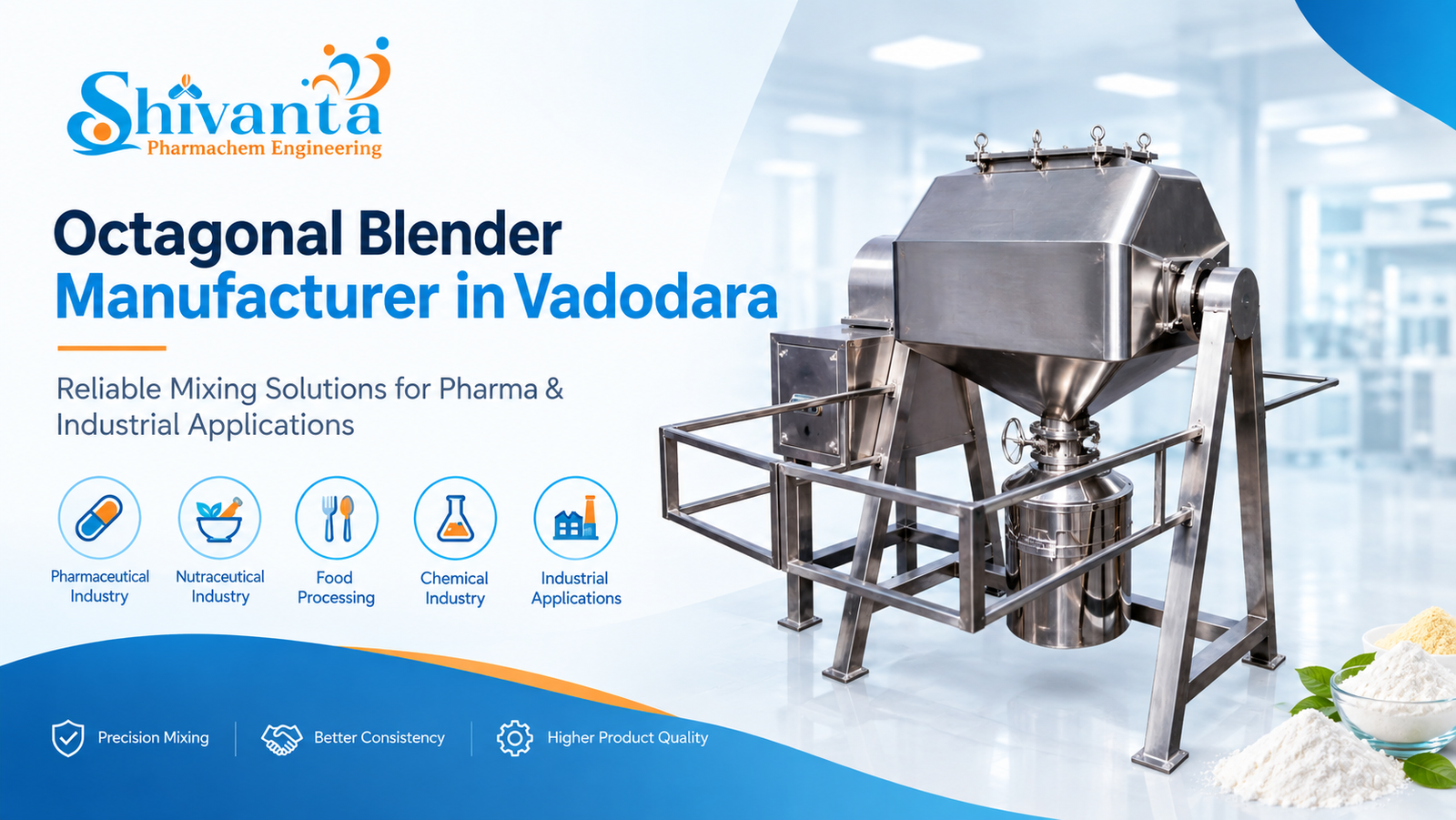
In pharmaceutical and industrial manufacturing, achieving consistent powder mixing is an important part of maintaining product quality. Whether the material is a pharmaceutical formulation, nutraceutical blend, food ingredient, or chemical powder, the blending equipment needs to provide controlled and uniform mixing from batch to batch. This is where an Octagonal Blender Manufacturer in Vadodara can become an important consideration for manufacturers looking to install reliable dry powder mixing equipment.
An octagonal blender is designed for efficient batch mixing of dry powders and granules. Its multi-sided vessel creates a suitable movement pattern for the material as the vessel rotates, helping different ingredients mix throughout the batch. However, choosing the right machine involves more than simply comparing prices. Construction quality, hygienic design, capacity, safety, customisation, installation and after-sales support all deserve attention.
AI Overview
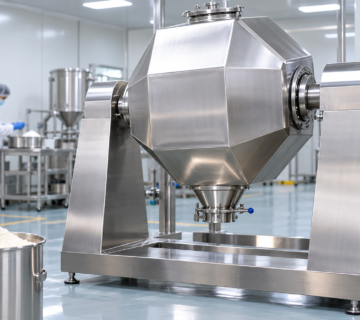
An octagonal blender is a batch-type powder mixing machine commonly used for blending dry powders, granules and similar materials. Its octagonal-shaped vessel rotates around its axis, causing the product to tumble and move within the container. This movement helps achieve uniform distribution of ingredients without relying on complex internal mixing mechanisms.
Octagonal blenders are particularly relevant to pharmaceutical, nutraceutical, food, chemical and other industries where consistent dry powder mixing is required. The actual performance of a machine depends on factors such as product characteristics, batch size, loading conditions, operating parameters and machine design.
What Is an Octagonal Blender?
An octagonal blender is a mechanical blending machine used to mix dry powders, granules and other free-flowing materials in batches. As the octagonal vessel rotates, the material moves through different areas of the container.
Unlike a simple container used for manual mixing, an octagonal blender machine provides controlled mechanical movement for batch processing. The design can support applications where manufacturers need repeatable mixing with a practical and relatively straightforward operating principle.
For pharmaceutical manufacturing, the equipment is generally selected with particular attention to product contact surfaces, cleaning requirements, material compatibility and hygienic design.
The exact construction and configuration can vary depending on the manufacturer’s design and the customer’s application requirements.
How Does an Octagonal Blender Work?
The working principle is based mainly on controlled tumbling and movement of the material.
During operation, the dry ingredients are loaded into the blender vessel. Once the machine starts, the vessel rotates around its axis. The octagonal geometry causes the powder or granules to move, fall and redistribute within the vessel.
This continuous movement helps bring different components into contact with each other.
A typical batch blending process involves:
- Loading the required quantity of material into the vessel
- Closing and securing the machine
- Starting the blending cycle
- Allowing the material to tumble and redistribute
- Stopping the machine after the required mixing cycle
- Discharging the finished blend
Mixing time and operating conditions should be determined according to the characteristics of the material and the manufacturing process rather than using one fixed setting for every product.
Key Features to Consider in an Octagonal Blender
When evaluating different blending machines, buyers should look beyond the external appearance of the equipment. The construction and configuration should match the intended application.
Stainless Steel Construction
For pharmaceutical and food-related applications, stainless steel is commonly considered for product-contact construction because it can support hygienic processing and cleaning requirements.
The appropriate grade and finish should be discussed with the manufacturer based on the product, process and applicable requirements.
Hygienic Design
A pharmaceutical blender should be designed with cleaning and maintenance in mind. Product-contact areas should be accessible enough for the required cleaning procedure, while the overall construction should minimise unnecessary areas where powder could accumulate.
Batch Mixing Capability
Octagonal blenders are generally used for batch processing. The appropriate machine size depends on factors such as product bulk density, batch quantity, available space and the required operating process.
Safety Features
Safety should be considered during machine selection. Depending on the configuration, buyers may need to review guarding, interlocking arrangements, emergency stop provisions and other safety-related features.
Customisation
Every production facility has different requirements. Manufacturers may therefore need equipment adapted to particular capacities, layouts, discharge arrangements, product-contact requirements or process conditions.
A good manufacturer should discuss these requirements before finalising the machine configuration.
Applications of Pharmaceutical Octagonal Blenders
A pharmaceutical octagonal blender can be considered for a variety of dry blending applications where controlled batch mixing is required.
Common application areas include:
- Pharmaceutical manufacturing
- Nutraceutical production
- Food processing
- Chemical manufacturing
- Powder-based industrial products
- Dry formulations and granulated materials
The suitability of the machine depends on the characteristics of the product. Powder flowability, particle size, density differences, moisture sensitivity and other material properties can influence the blending process.
For this reason, manufacturers should discuss their actual product and process requirements with the equipment supplier before purchasing.
Advantages of Using an Octagonal Blender Machine
The right blending equipment can simplify production while helping manufacturers maintain process consistency.
Some potential advantages include:
Uniform Material Distribution
The tumbling action of the vessel helps redistribute different ingredients throughout the batch. Proper machine selection and operating conditions are important for achieving the required level of uniformity.
Practical Batch Processing
An octagonal blender is suitable for manufacturers working with defined batch quantities. This makes it useful in production environments where products are processed in controlled batches.
Versatile Industrial Application
The same basic blending concept can be applied across pharmaceutical, nutraceutical, food and chemical processing, provided the machine configuration is appropriate for the material.
Easier Process Integration
Depending on the plant layout, an octagonal blender can be incorporated into a broader production line alongside equipment such as granulators, sifters, lifters and other processing machinery.
Why the Manufacturer Matters
Selecting an Octagonal Blender Manufacturer in Vadodara should not be based only on the quoted machine price. The manufacturer plays an important role in the equipment’s design, construction and long-term usability.
Before placing an order, consider the following factors.
1. Machine Quality
Check the overall construction, fabrication quality, finishing and quality-control practices. Ask about the materials used for product-contact components and other important machine parts.
2. Material of Construction
The material should be suitable for the product and process. For pharmaceutical applications, discuss the required stainless steel construction and surface finish with the manufacturer.
3. Capacity Options
Do not select a machine simply because its nominal capacity appears suitable. Consider actual batch requirements, product density, usable working volume and future production plans.
4. Customisation
Ask whether the manufacturer can accommodate your plant layout and process requirements. Customised discharge arrangements, access requirements or other design considerations may be important for some installations.
5. Safety
Review the safety arrangements before purchasing. Operators should be able to use the machine safely, and the equipment should be appropriate for the operating environment.
6. Hygienic and GMP-Friendly Design
For pharmaceutical facilities, cleaning and contamination control are important considerations. Discuss the machine design in relation to your facility’s GMP requirements and standard operating procedures.
7. Installation and Commissioning
A machine is only useful when it is correctly installed and integrated into the production process. Clarify what installation and commissioning support the manufacturer provides.
8. After-Sales Support
Ask about service support, spare parts, troubleshooting assistance and maintenance guidance. Reliable post-sales communication can be valuable throughout the equipment’s working life.
Read More :- Industrial Mixing Equipment Manufacturer in Gujarat: Enhancing Efficiency and Product Quality
Why Consider Shivanta Pharmatech?
Shivanta Pharmatech is a pharmaceutical machinery manufacturer based in Vadodara, Gujarat, serving industries that require specialised processing and mixing equipment.
For businesses searching for an Octagonal Blender Manufacturer in Vadodara, Shivanta Pharmatech can be considered as one of the manufacturers to evaluate when comparing equipment options for dry powder and batch mixing applications.
The company’s location in Vadodara is also relevant for manufacturers operating within Gujarat’s established pharmaceutical and industrial ecosystem. Gujarat has a significant presence across pharmaceutical manufacturing, chemicals, engineering and related industrial sectors, making local equipment suppliers a practical option for many businesses.
When evaluating Shivanta Pharmatech or any other Pharmaceutical Blender Manufacturer in Gujarat, buyers should discuss their specific requirements rather than selecting equipment solely from a standard catalogue. Important points include the material being processed, required batch size, product-contact construction, plant layout, cleaning procedure, discharge arrangement and operational requirements.
This approach helps ensure that the selected blender is appropriate for the actual production process.
How to Compare Octagonal Blender Manufacturers
A simple comparison checklist can make the purchasing process easier.
Before making a final decision, ask each manufacturer:
- What material of construction is proposed?
- Is the design suitable for the intended product?
- What batch size is required?
- What product-contact finish is available?
- Can the machine be customised?
- What safety features are included?
- How will the machine be cleaned and maintained?
- What installation support is provided?
- Is commissioning assistance available?
- What after-sales and spare-parts support is offered?
- Can the manufacturer provide relevant technical documentation?
A manufacturer that understands the application and clearly explains the equipment configuration can be more useful than one that simply provides the lowest quotation.
Why Choose a Local Manufacturer in Gujarat?
For companies operating in Gujarat, working with a local Industrial Blender Manufacturer in Gujarat can offer practical advantages during equipment discussions, installation planning and service coordination.
Vadodara itself has a strong industrial base, while Gujarat has a wider manufacturing ecosystem covering pharmaceuticals, chemicals, engineering, food processing and other industries.
However, geographical proximity should not be the only deciding factor. The manufacturer’s technical capability, machine quality, customisation approach and service support should remain central to the evaluation.
Frequently Asked Questions
1. What is an octagonal blender used for?
An octagonal blender is primarily used for batch mixing of dry powders, granules and similar materials. It is commonly considered for pharmaceutical, nutraceutical, food, chemical and industrial applications.
2. How do I select the right octagonal blender capacity?
Capacity should be selected according to the required batch quantity, material bulk density, usable working volume, product characteristics and production schedule. It is best to discuss these details with the manufacturer before finalising the machine.
3. Is an octagonal blender suitable for pharmaceutical manufacturing?
Yes, octagonal blenders can be considered for pharmaceutical dry blending applications when the machine’s construction, product-contact materials, hygienic design and configuration are suitable for the intended process.
4. What should I check before buying an octagonal blender?
Important factors include construction material, product-contact finish, capacity, machine design, safety features, cleaning requirements, customisation, installation, commissioning and after-sales support.
5. Why consider an Octagonal Blender Manufacturer in Vadodara?
A Vadodara-based manufacturer can be convenient for businesses operating in Gujarat, particularly when local coordination is useful for equipment discussions, installation and service. However, buyers should still compare technical capability and overall machine suitability before purchasing.
Conclusion
Choosing the right Octagonal Blender Manufacturer in Vadodara is an important decision for businesses that depend on consistent dry powder mixing. The machine should not only match the required batch size but also suit the product, cleaning process, plant layout and safety requirements.
From stainless steel construction and hygienic design to customisation, installation and after-sales support, each factor can influence the long-term value of the equipment.
If you are evaluating an octagonal blender machine for pharmaceutical, nutraceutical, food, chemical or industrial processing, Shivanta Pharmatech can be included in your manufacturer comparison. Discuss your product, batch requirements and plant needs with the technical team to identify a suitable configuration for your application.


No comment